
Everyone asks how much a PT earns. Almost nobody asks the more useful question: how many clients does that actually take. Here's the real maths, and where those clients actually come from.
- The actual number of clients that replaces a full-time wage in Edinburgh
- Where new PTs really find their first clients, ranked by what works
- Why a "saturated" market doesn't mean you can't break in
- A realistic month-by-month timeline to a full diary
- What actually kills momentum for new personal trainers
The Number Everyone Gets Wrong
People fixate on hourly rate. £30 an hour sounds good until you realise an hour of coaching is never just an hour.
Programming, messages, admin, and travel all eat into your week. The number that actually matters isn't your rate. It's how many clients you need on your books at once.
Get that number right, and the rest of your plan follows. Get it wrong, and you'll either underprice yourself or set an unrealistic target that knocks your confidence in month two.
Most new PTs never actually sit down and do this maths. They set a vague goal like "get busy" and wonder why they can't tell if they're on track.
A specific number changes how you plan your week. Fifteen clients is a list you can build deliberately, one conversation and one referral at a time.
The Real Maths: How Many Clients You Need
Take an average Edinburgh salary of around £28,000 to £30,000 a year. At £35 a session, that's roughly 16 to 17 clients a week, trained once each.
Most self-employed PTs train regular clients two to three times a week rather than once, so the actual client count is often lower than the session count suggests.
In practice, 15 to 20 regular clients at £30 to £45 a session covers most people's outgoing wage, once you account for gym rent and no-shows.
Build in a buffer for cancellations too. Even loyal clients cancel sometimes, so a "full" diary on paper rarely means every slot gets paid every single week.
This is also why pricing matters as much as client count. Two PTs with 15 clients each can have very different incomes, depending purely on what they charge per session.
That's a target you can actually plan around, instead of a vague hope that "the clients will come". Our full salary breakdown covers how this scales as your rate and experience grow.
Where Your First Clients Actually Come From
Social media gets the credit, but it rarely does the heavy lifting early on. Most new PTs get their first clients somewhere much less glamorous.
Trust builds through repeated, small interactions long before it builds through a polished feed. That's why the channels below outperform a big social following in the first few months.
The Gym Floor
Talking to members, offering a free form check, being visible and consistent. This alone can generate your first 10 clients without a website or a single paid ad.
Referrals From Existing Clients
Ask every happy client for one introduction a month. A handful of clients each sending one friend compounds fast.
A Clear Niche
"I help postnatal mums get strong again" beats "I do personal training" every time. A niche gives people a reason to choose you specifically.
Social Media, Used Consistently
Not for going viral. For staying visible to people who already know you, so you're the first name they think of when they're ready.
Want a course that actually teaches this?
The Level 3 PT Course Edinburgh includes a full client acquisition module, not just anatomy and programming.
Take the Free Suitability QuizWhy a "Saturated" Market Doesn't Shut You Out
The number of personal trainers in the UK grew from around 15,000 to over 25,000 between 2011 and 2022. That sounds like bad news.
It isn't, once you look closer. Demand for fitness coaching grew alongside it, and most of that growth sits in generalist trainers competing on the same broad pitch.
A trainer with a clear niche and a real acquisition plan isn't competing with all 25,000 people. They're competing with the handful who serve the exact same client, in the exact same way.
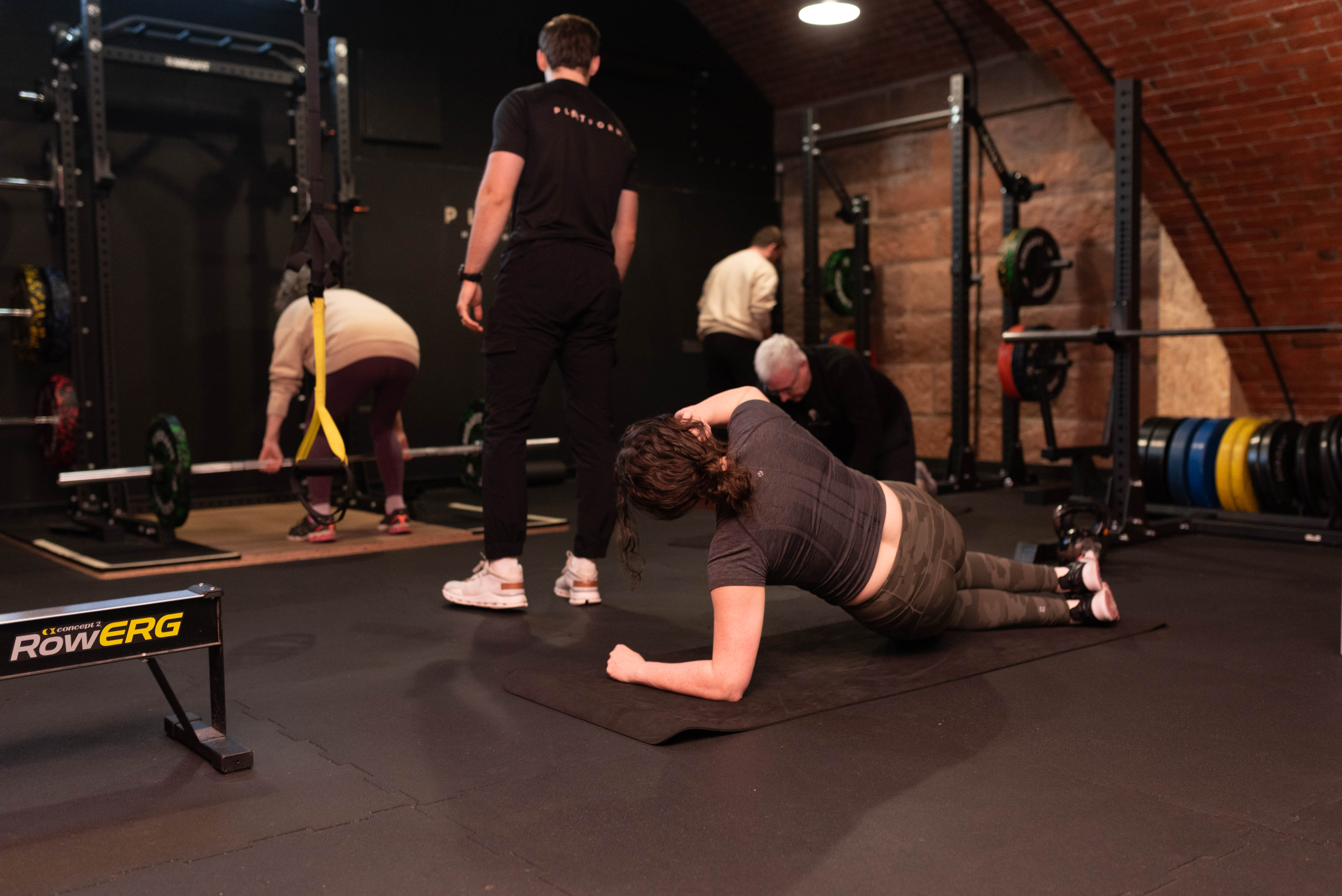
Edinburgh's gym market is also more fragmented than people assume. Commercial chains, boutique studios, and independent gyms like Platform all attract slightly different members with different needs.
That fragmentation is an advantage for a new PT. There's rarely one "best" trainer in a city this size. There's room for many, each serving a slightly different client well.
See the Coaching Standard Behind This
Building a client base starts with being a coach people actually want to train with. Here's what that standard looks like on our gym floor.
The Realistic Timeline, Month by Month
Month one is usually the slowest. You're new, you have no track record, and you're still finding your voice as a coach.
By month three, referrals typically start. A few early clients see results and mention you to a friend without being asked.
By month six, most FCC graduates who follow a consistent acquisition routine have 8 to 12 regular clients. By month nine to twelve, a full diary of 15 to 20 is realistic for someone who stuck with it.
One of our graduates started with 3 clients in her first month. By month four she had a waiting list, purely from consistent gym floor conversations and asking for referrals.
Notice what's missing from that story. No viral post, no expensive ad campaign, no overnight breakthrough. Just a routine, repeated for four months without stopping.
That's the pattern behind almost every full diary we've seen. Slow at the start, then it compounds faster than most new PTs expect once trust starts to build.
What Kills Momentum for New PTs
The biggest cause of a stalled client base isn't a bad course or a bad location. It's giving up on marketing yourself after a few quiet weeks.
Momentum in this business is slow to start and easy to lose. Skip two weeks of gym floor conversations and referral asks, and you can feel the diary go quiet fast.
A simple weekly routine beats any single clever tactic. Ten minutes talking to members. One referral ask per happy client. One piece of content a week.
Comparison is the other momentum killer. Watching another trainer's fuller diary or bigger following early on can make your own slower progress feel like failure. It usually isn't.
Everyone's timeline looks different depending on their gym, their niche, and how much time they can put in each week. Compare your progress to your own numbers from a month ago instead.
Track your own weekly actions, not just client count. Conversations started, referrals asked for, follow-ups sent. Those numbers predict next month's clients better than this month's total does.
Ready to build a real plan, not just a qualification?
Enrol on a course that teaches the business side alongside the coaching.
Enrol on the Level 3 PT CourseBuilding a Waiting List, Not Just a Client List
The goal isn't just to fill your diary. It's to fill it with a waiting list behind it, so you can raise your rates from a position of demand, not desperation.
That only happens once your existing clients are getting results and talking about it. Retention and referrals matter more than constant new-client hunting.
It's cheaper too. Keeping an existing client happy takes far less effort than finding and converting a brand new one from scratch.
Check in on progress every few weeks. A client who sees their own results tracked and celebrated is far more likely to stay, and far more likely to mention you unprompted.
Once you have a genuine waiting list, you're no longer chasing clients. You're choosing which ones fit your niche best, which is a very different position to be in.
Watch the Coaching Culture in Practice
This gives you a real sense of the day-to-day coaching that builds the kind of reputation clients refer their friends to.
A qualification opens the door. A client acquisition plan and a genuine focus on results is what actually fills the diary behind it.
Common Questions
-
How many personal training clients do you need to quit your job?
Most people need 15 to 20 regular clients at £30 to £45 a session to replace an average Edinburgh salary. That's roughly 20 sessions a week, which is realistic once you have a full diary.
-
Where do most new personal trainers find their first clients?
The gym floor is the single fastest route for most new PTs. Talking to members, offering free form checks, and being visible and consistent generates far more clients early on than social media alone.
-
Is the personal training market too saturated to break into?
The number of UK personal trainers grew from around 15,000 to over 25,000 between 2011 and 2022, but demand for fitness coaching grew alongside it. A clear niche and a real client acquisition plan matter more than the total number of trainers in the market.
-
How long does it take to get a full client diary as a new PT?
Most FCC graduates take 6 to 12 months to reach a client base that replaces a full-time wage. The first 3 months are usually the slowest, since you're building trust and a reputation from nothing. See our salary breakdown for the full earnings picture.
-
What stops new personal trainers from getting clients?
Inconsistent follow-up is the biggest cause. Most new PTs give up marketing themselves after a few quiet weeks, right before momentum would have built. A clear weekly acquisition routine matters more than any single tactic.
-
Do I need social media to get personal training clients in Edinburgh?
It helps, but it isn't the main driver for most new PTs. Referrals, gym floor conversations, and a strong local reputation typically bring in more paying clients than a following built from scratch. Our Level 3 PT Course covers all of these channels in the career blueprint module.