
People ask me this more than anything else. Not "what qualification do I need" or "how long does it take." They want to know if this job actually pays. I'm Jamie Henderson, and I've been on every side of that question for 11 years.
- What I actually earned in my first year as an employed PT
- Why the published "average salary" figures for Edinburgh undersell the job
- The real gap between employed and self-employed PT income
- How I grew Platform Health and Fitness to £250,000 in annual revenue
- A realistic first-year income estimate for someone starting today
- What I Actually Earned in My First Year
- Why the "Average PT Salary" Figures Undersell the Job
- Employed vs Self-Employed: The Real Gap in Edinburgh
- How I Went From a PT Wage to a £250k Business
- What a New PT Should Expect to Earn in Year One
- How to Push Past the Average and Fill Your Diary
- Common Questions About PT Earnings in Edinburgh
What I Actually Earned in My First Year
I qualified and walked straight into an employed role at a gym. My wage was fixed. It did not move whether I trained two clients a day or eight.
That wage sat close to what most new PTs in Edinburgh still earn today, somewhere between £18,000 and £24,000. It was enough to live on. It was not enough to feel like the job I had trained for.
I remember doing the maths on my hourly rate one quiet Tuesday. The gym charged clients far more per session than I ever saw. That gap is the entire reason self-employment exists in this industry.
Why the "Average PT Salary" Figures Undersell the Job
Search "personal trainer salary Edinburgh" and you'll find numbers all over the place. Indeed puts it around £32,826 a year. Glassdoor shows figures as low as £22,640. Neither tells you the whole story.
Those numbers blend two very different jobs into one average. Employed PTs on a gym wage. Self-employed PTs running their own client base. They are not the same career, and they do not pay the same.
An average is only useful if you know which side of it you are aiming for. I always tell new students the same thing: decide early whether you want a wage or a business, because the path to each looks different.
Employed vs Self-Employed: The Real Gap in Edinburgh
An employed PT in an Edinburgh gym earns a base salary, usually somewhere between £22,000 and £33,000 depending on the chain and your experience. Some roles add commission on top. Your ceiling is set by your employer, not by how good you are.
Self-employment removes that ceiling completely. A self-employed PT running 20 to 25 sessions a week at £30 to £45 a session brings in roughly £30,000 to £75,000 gross a year, before rent and expenses.
That range is wide because it depends entirely on you. Your pricing. Your client retention. How full your diary actually is on a normal Tuesday, not a good week.
I went self-employed within my first two years. It was uncomfortable at first. No fixed pay cheque, no safety net. But the income cap disappeared, and that changed everything about how I planned my career.
Wondering which path actually fits your goals?
The Level 3 PT Course Edinburgh is built around both routes, employed and self-employed, so you leave qualified for whichever one you choose.
Take the Free Suitability QuizHow I Went From a PT Wage to a £250k Business
I've worked every version of this career. Employed in a gym. Self-employed building my own client base from nothing. Coaching online. A year-long internship in elite sport.
Then I founded Platform Health and Fitness here in Edinburgh. I grew it to £250,000 in annual revenue within three years. Along the way I coached more than 1,000 personal training clients myself.
None of that happened because I found a shortcut. It happened because I understood the business side of training clients, not just the coaching side. Pricing. Retention. Referrals. An actual plan for filling my diary.
That gap, between being a great coach and running a profitable business, is what separates PTs who hit £60,000 a year from PTs who stall at £20,000. I built The Fitness Coach Chronicle to close that exact gap for the next generation.
See the Standard We Train To
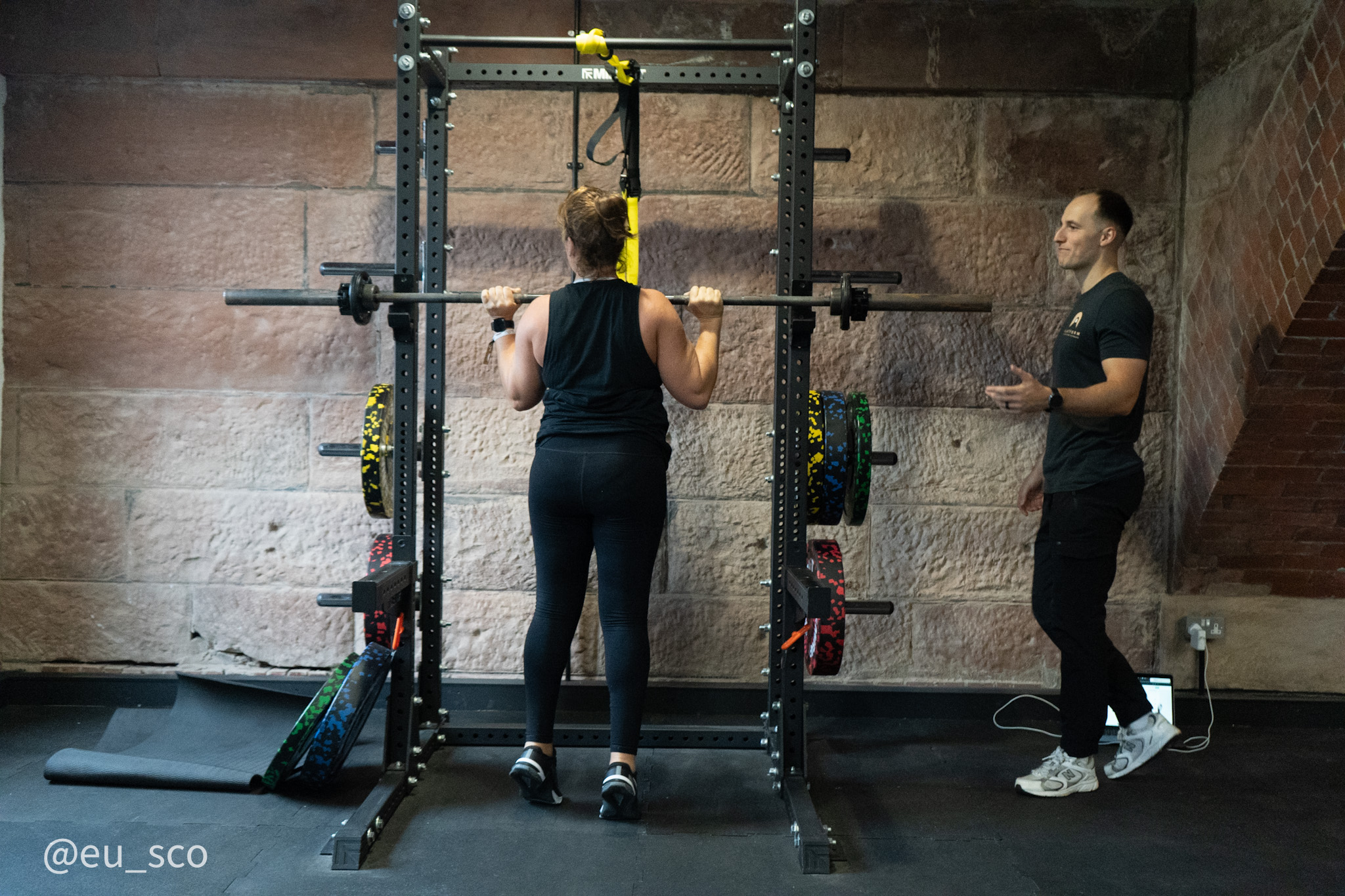
This is the same gym floor where our Level 3 students complete their practical days. It's a working business, not a training suite built for show.
What a New PT Should Expect to Earn in Year One
Most of our graduates take 6 to 12 months to build a client base that replaces a full-time wage. That is not a failure. It's how long trust takes to build in this industry.
If you go employed, expect £18,000 to £24,000 while you learn the job and get comfortable with clients. Some gyms add commission once you hit a session target.
If you go self-employed from day one, expect your first three to six months to be slower. You are building a client base with no existing gym membership feeding you leads.
Either route can work. I've hired PTs who came up through both. What separates the ones who succeed is how seriously they take the business side, not just the training side.
How to Push Past the Average and Fill Your Diary
The PTs I've watched earn the most all did three things early. They picked a clear type of client to help. They asked existing clients for referrals, every single month. They tracked their numbers like a business owner, not a hobbyist.
One graduate started with three clients in her first month. By month four she had a waiting list. She didn't get lucky. She followed up with every gym member who asked her a question in passing.
That is the part most courses leave out entirely. A qualification gets you in the door. A client acquisition plan is what actually pays your rent.
Want the business training most PT courses skip?
Every FCC course includes client acquisition and pricing strategy, not just anatomy and programming.
Enrol on the Level 3 PT CourseCommon Questions About PT Earnings in Edinburgh
-
What is the average personal trainer salary in Edinburgh?
Employed personal trainers in Edinburgh earn between £22,000 and £33,000 a year on average, depending on the gym and your experience. That figure is a wage cap, not a ceiling. Self-employed PTs with a full client book routinely earn well past it.
-
Can you actually make good money as a personal trainer in Edinburgh?
Yes, but not immediately, and not by staying employed. A self-employed PT running 20 to 25 sessions a week at £30 to £45 a session earns roughly £30,000 to £75,000 gross a year before expenses. I grew Platform Health and Fitness to £250,000 in annual revenue within three years of going independent.
-
How long does it take a new PT to earn a full-time income?
Most of our graduates take 6 to 12 months to build a client base that replaces a full-time wage. It depends on how consistently you market yourself in your first few months, not just how good a coach you are.
-
Is it better to work for a gym or go self-employed as a PT?
Employed roles give you a safety net and a captive audience of gym members while you learn the job. Self-employment removes your income cap entirely. Most PTs I know, including me, start employed or floor-based and move to self-employed once they have a client base. See our Online PT Course Edinburgh if you plan to build a coaching business from day one.
-
Do online personal trainers earn less than in-person PTs?
Not necessarily. Online coaching removes the cap on how many clients you can train at once, since you are not limited by gym floor hours. It suits PTs who are comfortable running a business through a screen as well as a squat rack.
-
What qualification do I need to start earning as a PT in Edinburgh?
You need a CIMSPA-endorsed Level 3 Personal Trainer qualification to work in Edinburgh gyms. The FCC's Level 3 PT Course Edinburgh is CIMSPA endorsed and OFQUAL regulated, and covers the business and client-acquisition side most courses skip.