
I remember staring at the price of my first course and hesitating for weeks. It felt like a lot of money for a certificate. I didn't yet understand what I was actually buying.
- What I paid to qualify, and what I wish I'd known first
- Real 2026 course price ranges across Edinburgh providers
- Why the cheapest course usually costs more in the long run
- The actual return I got on my own investment
- How to work out if the cost makes sense for you
- What I Paid to Qualify (and What I Didn't Know Yet)
- What a PT Course Actually Costs in Edinburgh
- Why the Cheapest Course Is Often the Costliest Mistake
- The Return I Actually Got on My Investment
- How to Work Out If the Cost Is Worth It for You
- What 0% Finance Changes About the Decision
- Common Questions About PT Course Costs
What I Paid to Qualify (and What I Didn't Know Yet)
I paid for a course the same way most people do. I compared prices, picked one that fit my budget, and hoped it would work out.
What I didn't know then was how little the certificate itself would matter. What mattered was whether the course taught me to run a business, not just how to spot a bad squat.
Looking back, I'd have paid more for the right course and less time chasing the cheapest one. That single decision would have saved me a year of guessing.
What a PT Course Actually Costs in Edinburgh
Prices vary more than people expect. Online-only courses typically run £1,000 to £1,800. Blended courses with tutor support cost £1,500 to £2,500.
Fast-track or in-person intensive courses sit at the top, usually £2,000 to £3,000. Most providers, including The FCC, spread that cost across monthly payments at 0% interest.
The gap between the cheapest and most expensive course is real. But price alone tells you almost nothing about whether a course will actually get you hired.
Why the Cheapest Course Is Often the Costliest Mistake
I've hired plenty of PTs since founding Platform. The first thing I check is whether their qualification is CIMSPA endorsed and Ofqual regulated. Without that, a certificate is just paper.
Some of the cheapest courses skip proper practical assessment entirely. A student passes an exam but has never coached a real client under pressure.
That gap shows up fast on a gym floor. I've watched students retrain a year later because their first course wasn't recognised by the employers they wanted to work for.
Paying £2,000 once beats paying £1,000 twice. That's not a sales line. It's what I've seen happen, repeatedly, over 11 years.
Not sure which course fits your budget and goals?
The free suitability quiz matches you to the right route, whether that's Fast-Track, Online, or our full Level 3 course.
Take the Free Suitability QuizThe Return I Actually Got on My Investment
My course cost was a small fraction of what I earn from the business I built afterwards. Within three years of going self-employed and founding Platform, I'd grown it to £250,000 in annual revenue.
I've now coached over 1,000 personal training clients. Every one of them traces back to that first, hesitant decision to enrol.
A self-employed PT charging £30 to £45 a session can recover a £2,000 to £3,000 course cost within their first month or two of a full client diary. The course fee was never the real cost. Wasted time was.
What This Looks Like in Practice
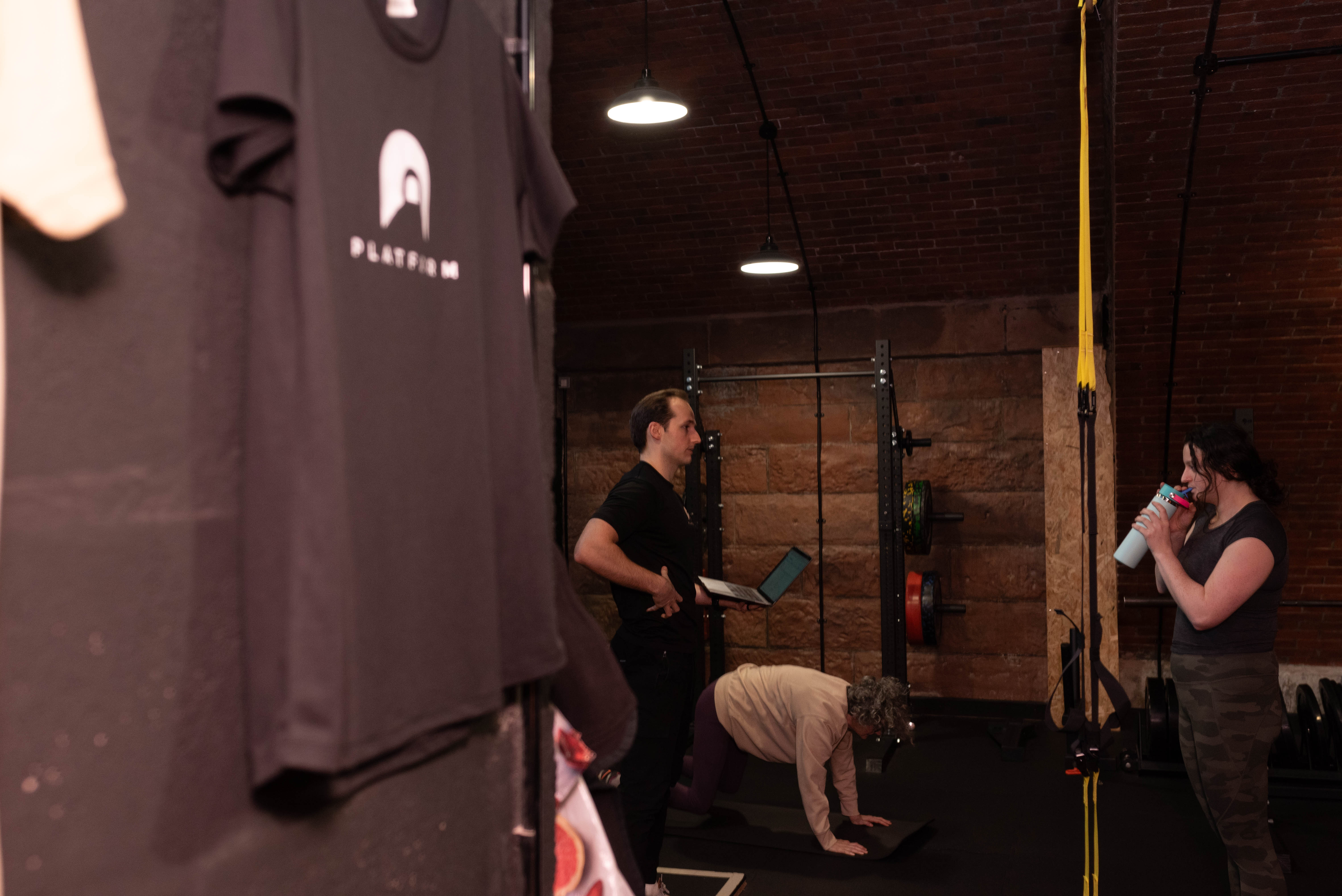
This is the same gym floor where our students train under real coaching conditions, not a simulation. It's worth seeing before you decide.
How to Work Out If the Cost Is Worth It for You
Ask yourself three questions before you enrol anywhere. Is the course CIMSPA endorsed and Ofqual regulated? Does it include real practical days with real clients?
Does it teach you how to actually find and keep clients once you qualify? If a course can't answer yes to all three, the price doesn't matter much either way.
Every FCC course was built to answer yes to all three, because I built it from the mistakes I made getting here myself.
Ready to make the investment count?
Enrol on a course that teaches coaching and business together, backed by 0% finance.
Enrol on the Level 3 PT CourseWhat 0% Finance Changes About the Decision
Spreading a £2,500 course over 12 months at 0% interest turns a large upfront cost into roughly £208 a month. That's often less than a single client session pays you.
0% finance doesn't change what the course is worth. It just removes the barrier of finding the full amount upfront, which is the thing that stops most people from starting at all.
Common Questions About PT Course Costs
-
How much does a personal trainer course cost in Edinburgh?
Online-only courses typically cost £1,000 to £1,800. Blended courses with tutor support run £1,500 to £2,500. Fast-track or in-person intensive courses cost £2,000 to £3,000. Most providers, including The FCC, offer 0% finance so you can spread the cost monthly.
-
Is it worth paying more for a course with in-person practical days?
In most cases, yes. Coaching a real client in a real gym is a different skill from watching a video of it. I hire based on how someone handles a live client, not their exam score. In-person practical days build that skill before you ever sit in front of a paying client.
-
What happens if I choose the cheapest PT course available?
You often end up paying twice. A weak qualification without CIMSPA endorsement or Ofqual regulation can stop you getting hired, and some students end up retraining a year later. Check accreditation before you check price.
-
How quickly can a PT course pay for itself?
A self-employed PT charging £30 to £45 a session recovers a £2,000 to £3,000 course cost within their first month or two of a full client diary. The real cost isn't the course fee. It's the time you spend without a client acquisition plan. Read our guide on how much personal trainers actually earn in Edinburgh for the full picture.
-
Does 0% finance make a PT course more affordable?
Yes. Spreading a £2,500 course over 12 months at 0% interest turns a large upfront cost into a manageable monthly payment, often less than what you'd earn training a single new client each week.
-
Which FCC course gives the best return on investment?
The Level 3 PT Course Edinburgh gives the strongest foundation, since it includes the business and client-acquisition training that determines whether you actually earn back your investment. The Fast-Track option suits people who want to qualify and start earning sooner.